

by Lt(N) Andrew McLaughlin
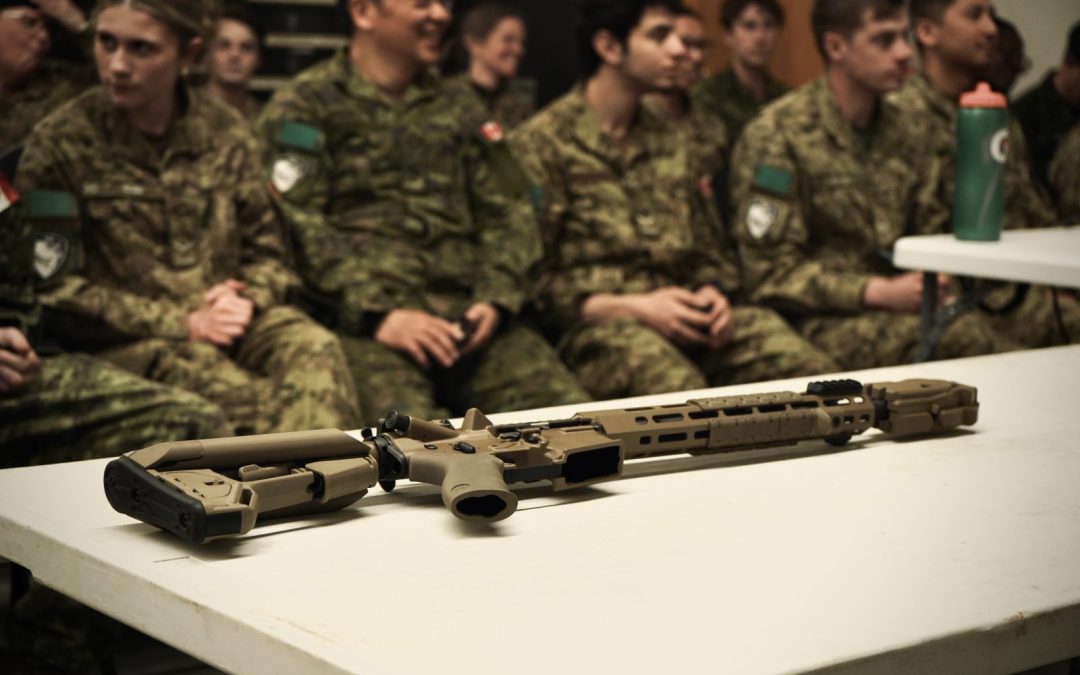
Members of 33 Service Battalion (33 Svc Bn) recently took part in an introduction to the Canadian Modular Assault Rifle (CMAR) project, gaining first-hand exposure to the C25 General Service Rifle and the C26 Full Spectrum Rifle, along with supporting systems including the C27 40 mm grenade launcher.
This initial familiarization visit from the CMAR project team was organized with the support of 33 Svc Bn weapons technician specialists, with the benefits of the proximity of its headquarters in Ottawa and its unique composition including personnel with Combat Service Support (CSS) subject matter expertise (SME).
The visit focused on presenting the capabilities and design advancements of these next generation weapon systems to SMEs and unit soldiers, laying the foundation for future training and operational integration.
“33 Svc Bn employs weapons technicians who are trained to perform maintenance and repairs on Canadian Armed Forces (CAF) weapon systems, to include the C7 and C8 rifles. This opportunity was created to inform RCEME (Corps of Royal Canadian Electrical and Mechanical Engineers) weapons technicians about the new weapons systems being adopted by the CAF, as well as the technical issues and concerns that may be encountered in the future,” said Master Corporal Richard Hem, a 33 Svc Bn senior weapons tech.
“It also provided an opportunity for a new generation of weapons technicians to gain insight into how procurement systems function in practice.”
Photos: 33 CBG
Unit weapons techs explored the systems’ features, maintenance requirements, and overall design, while the troops were introduced to handling, functionality, and enhanced performance capabilities.
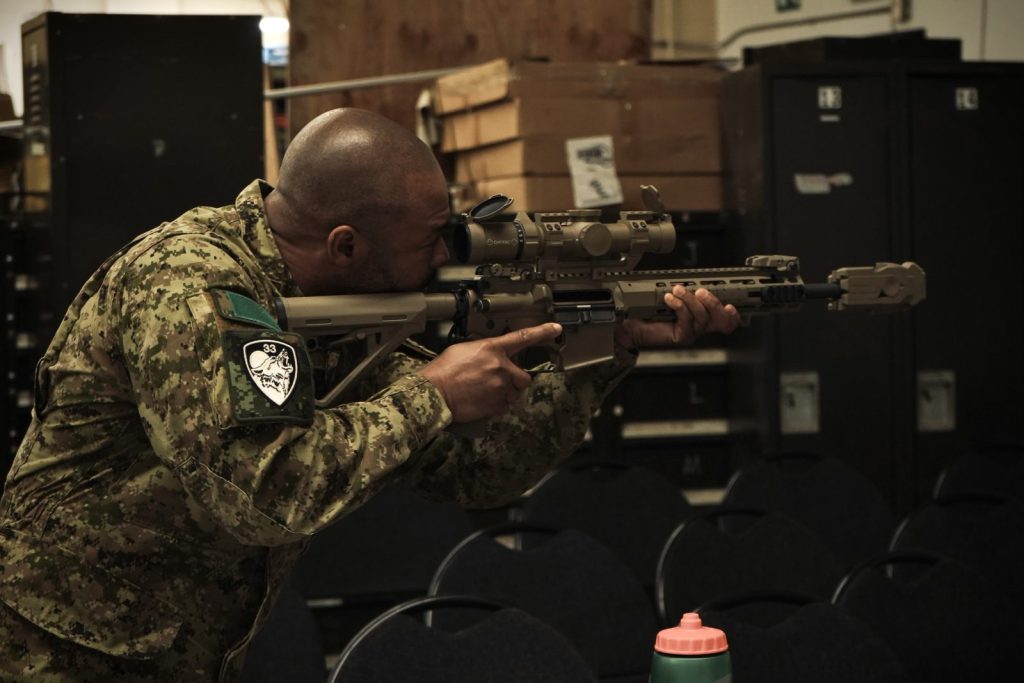
“The overall shorter length and reduced barrel size were seen as significant advantages by CSS soldiers,” said Hem. “One vehicle technician noted that the reduced length would greatly improve ease of movement when entering and exiting an HLVW wrecker compared to the current rifle.
“The new sling system, featuring quick-detachable mounts, was also well received, as it offers a big improvement over the older slings issued with the C7A2. Another soldier highlighted the new sighting system, noting that the clarity and definition of the optic, along with the updated reticle, were impressive and provided a much-improved sight picture.”
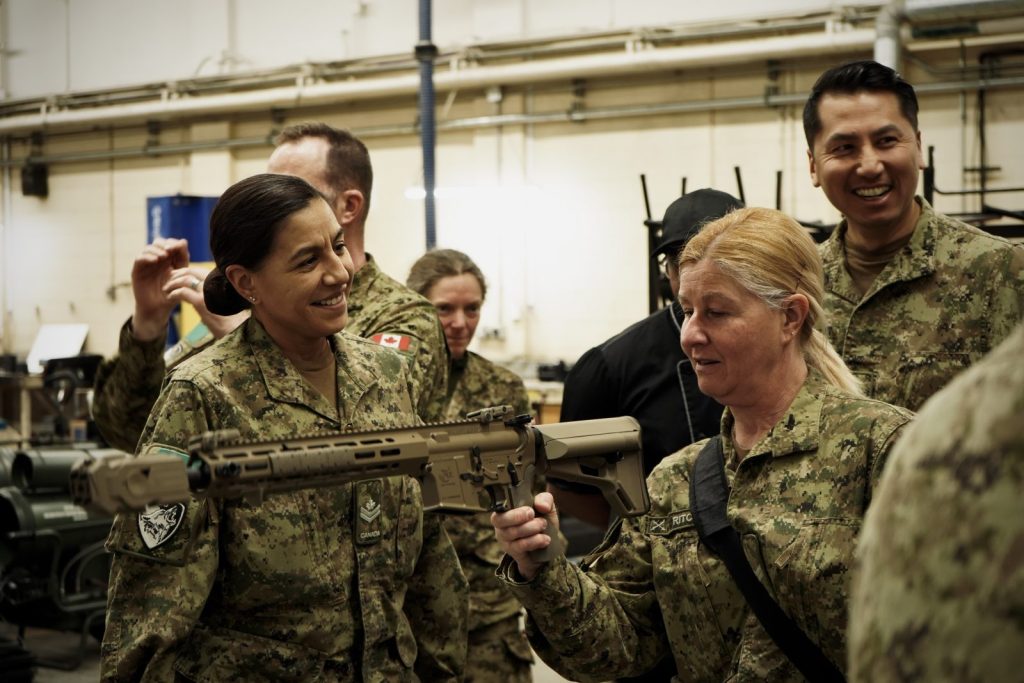
“As the Canadian Army continues its modernization efforts and the reserve force prepares for its tasks in the Defense of Canada Division, we remain committed to building expertise and readiness with the next generation of modular weapon systems,” said Lieutenant-Colonel Shelley Worsley, commanding officer.
“We’re extremely proud to be the unit selected to provide feedback and help lead the way for the integration of new systems that will impact our capabilities – not just at my unit which also has companies in North Bay and Sault Ste Marie – but Canada-wide. It’s a very exciting time and we could not be more ready to support these programs in any way we can.”
The soldiers agree. “This opportunity allows soldiers to provide direct input and feedback from a reservist perspective,” said Hem.
“Since reservists are primarily part-time soldiers, they bring forward different viewpoints and concerns that are not always identified. A wide range of professional backgrounds were represented – such as school teachers, accountants, engineers, mechanics, and IT specialists – contributing valuable and positive feedback on the system.”
Lt(N) Andrew McLaughlin is a public affairs officer with 33 Canadian Brigade Group.