

Photo: Cpl Alex Ward
by Lt(N) Andrew McLaughlin
A major Canadian Army Reserve (ARes) training exercise recently wrapped at Garrison Petawawa that served as a rehearsal of sorts for a new deployment framework.
33 Canadian Brigade Group (33 CBG) completed Exercise Wolfpack Ambush over the consecutive weekends of March 20-22 and 27-29, with personnel participating from units across Northern, Central, and Eastern Ontario.
Hundreds of ARes soldiers converged for the major live-fire training event, forming a “team of teams” that could serve as a rudimentary framework for future CBG tasks that could include standing up light-infantry battlegroup forces aimed at maintaining ARes readiness to support international operations. These new units will be made up of full-time reservists.
Known as “The Wolfpack,” 33 CBG was ready to test the model.
The first weekend of the exercise served as a work-up, where the basis of the larger plan was tested in a Level 2 (live) context and the stage was set for the second phase. On the second weekend, 33 CBG generated a robust combined arms force including infantry, artillery, engineers and the critical signals and Combat Service Support required to operate in the Level 3 (live) context.
The infantry successfully completed pairs, section and platoon Level 3 live-fire training, where fire and manoeuvre were enhanced by utilizing specialized targetry, including robotic pop-up targets brought in exclusively for the exercise.

Photo: Cpl Liam Stagg
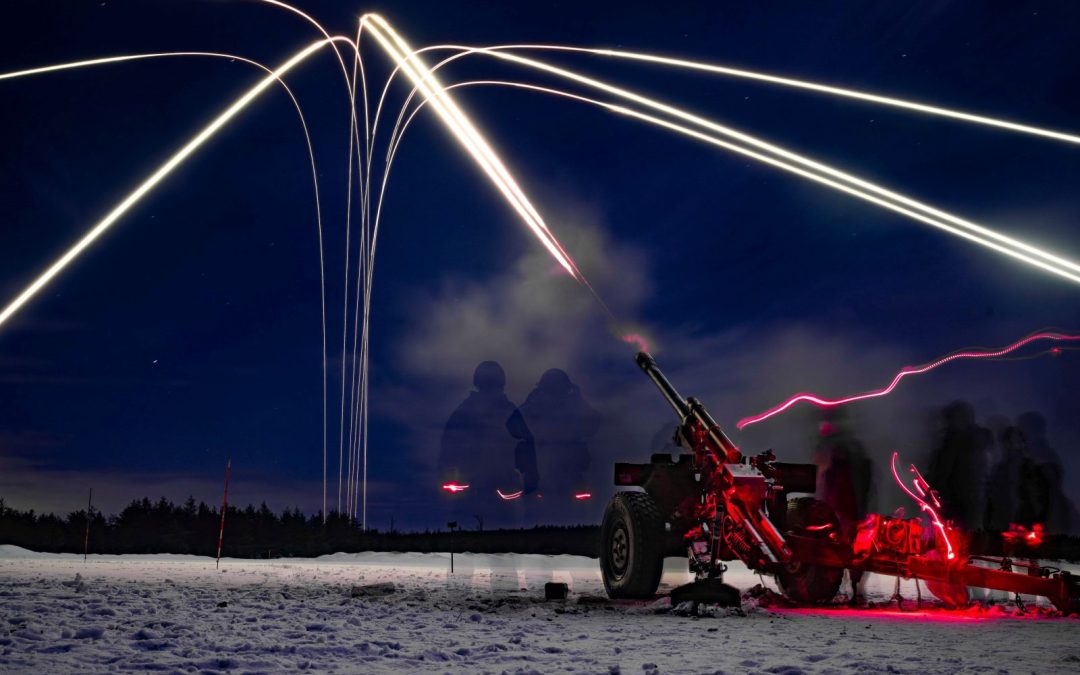
The gunners of the Wolfpack added to the event, launching a combined regimental exercise at Level 4 (battery live), led by 30th Field Artillery Regiment (30 Fd) alongside 42nd Field Artillery and 11th Field. This included fire missions, forward observers, and recce elements, day and night as well as planning and coordination with Regular Force counterparts from 2 Royal Canadian Horse Artillery (2 RCHA).
“From coordinated regimental firing to executing a Troop Commander’s fire plan at the battery level, our gunners demonstrated precision, discipline, and teamwork across all elements,” said Captain Sam Waterman, 30 Fd. “With operations spanning the gun line, observation posts (OPs), and regimental headquarters, this exercise showcased the strength and integration of our artillery capabilities in a dynamic field environment.”
A deployed Combat Service Support element was also on full display, as 33 Service Battalion’s logistics and support capabilities were put to the test of supporting such a large and complicated training event.
“Mobile support equipment operators, weapons techs, maintenance techs, cooks and others kept the mission moving with nonstop refueling, troop transport, feeding, and resupply,” said Lieutenant Isabelle Hendy, of Call Sign 8. “Their around the clock support ensured the Wolfpack could train effectively in a high tempo environment.”
With hundreds of troops engaged in live-fire training evolutions at multiple locations across the Garrison Petawawa range training area simultaneously, the teamwork of the Wolfpack shone through, but only after a great deal of planning.
“Exercises like Wolf Ambush take an immense amount of planning and synchronization to be conducted safely and efficiently,” said Lieutenant-Colonel Ryan Hendy, exercise director.
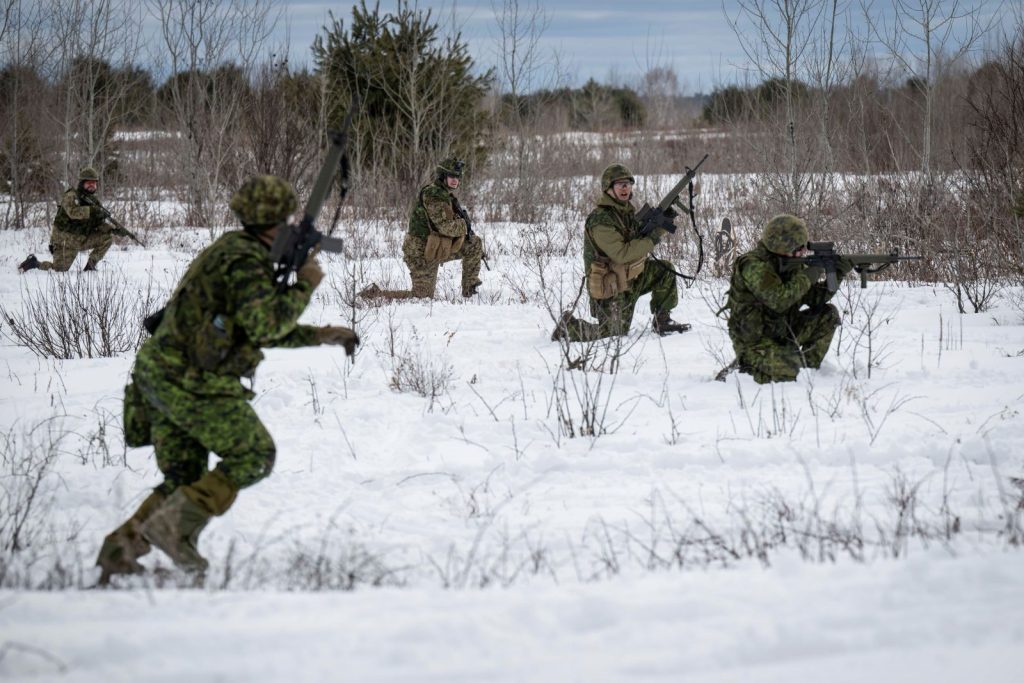
Photo: Cpl Liam Stagg
Key leadership of The Brockville Rifles paired with the Highland Tactical Grouping (HTG), consisting of the Cameron Highlanders of Ottawa (Duke of Edinburgh’s Own) and Stormont, Dundas and Glengarry Highlanders were instrumental in planning the complex live-fire ranges, and were responsible for confirming the Wolfpack could operate in the Level-3 context.
Multiple parade nights were utilized to conduct detailed battle procedure (BP) ahead of the exercise. BP involves receiving orders, analyzing the mission, conducting reconnaissance, preparing plans, and issuing orders to subordinates. This iterative process emphasizes speed, flexibility, and decentralized decision-making (mission command), all critical elements to effective land operations—and integrating small units into the larger “team of teams.”
“Our operational planners played a critical leadership role in the execution of this highly successful readiness exercise, and provided effective personnel to the Wolfpack team of teams,” said Hendy.
The sappers of 33 Combat Engineer Regiment (33 CER) joined in as well. Adding to the complexity and weight of the exercise, 33 CER conducted multiple live-fire events of their own, enhancing the combined arms approach and further testing the “team of teams” concept.
“We deployed to test our skills with a variety of weapons systems,” said Lieutenant-Colonel Ng, commanding officer. “We ran live grenade ranges, C6 and C9 machine-gun shoots; but also employed shotguns to further hone our capabilities to employ these systems within the contemporary battlefield context.”
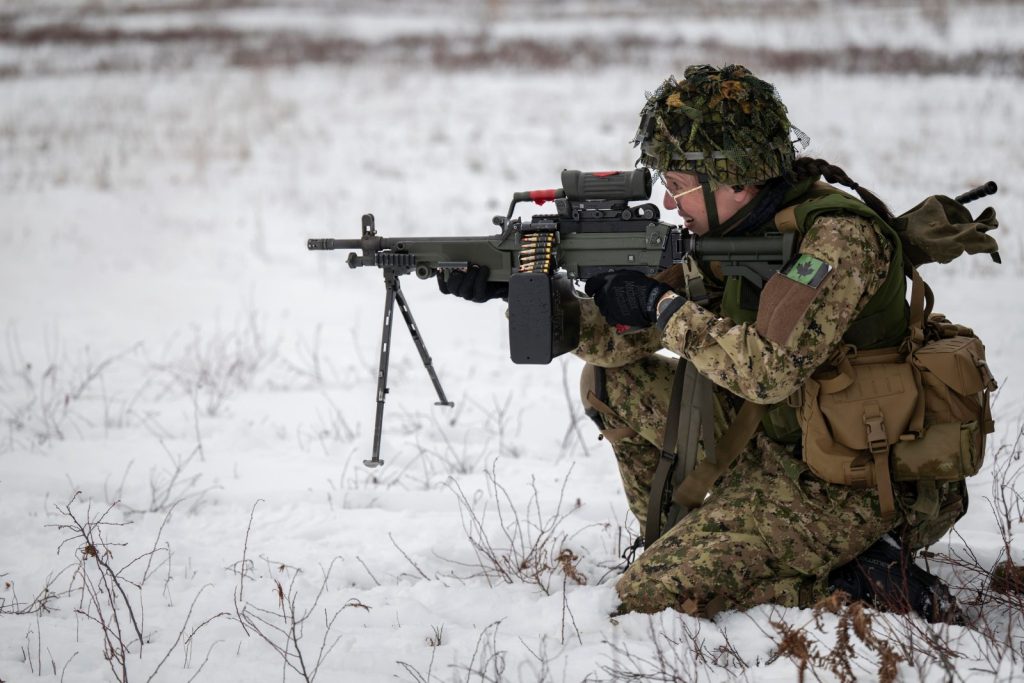
Photo: Cpl Liam Stagg
With the coming re-organization of the Army’s CBGs under a newly-formed Defence of Canada Division and following the direction that “the [Army] must also develop ARes self-sufficiency in terms of training, operations, and sustainment to accomplish the needed capacity to support modernization efforts,” the Wolfpack acknowledged “the challenge in meeting universal standards of proficiency,” and “a more tailored and imaginative approach to reserve training and sustainment [was] undertaken.”
It’s within this context that the Wolfpack has accepted the challenge of modernization, and adaptation, by implementing the “team of teams” approach to collective training—and all other activities—just as real wolves in the natural environment do to remain ready to spring an ambush on prey.
It is apt then that Wolfpack has unofficially adopted a famous quote by Kipling as their mantra: “For the strength of the Pack is the Wolf, and the strength of the Wolf is the Pack.”
Lt(N) Andrew McLaughlin is a public affairs officer with 33 Canadian Brigade Group.
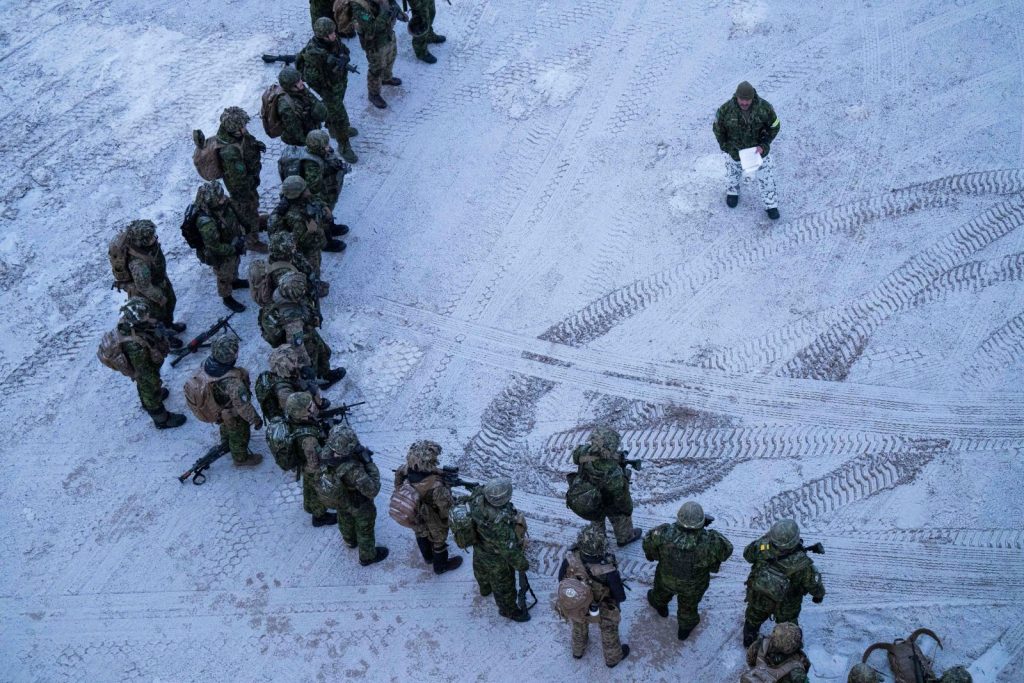
Photo: Cpl Dustin Levasseur-Pearce

Glorious!